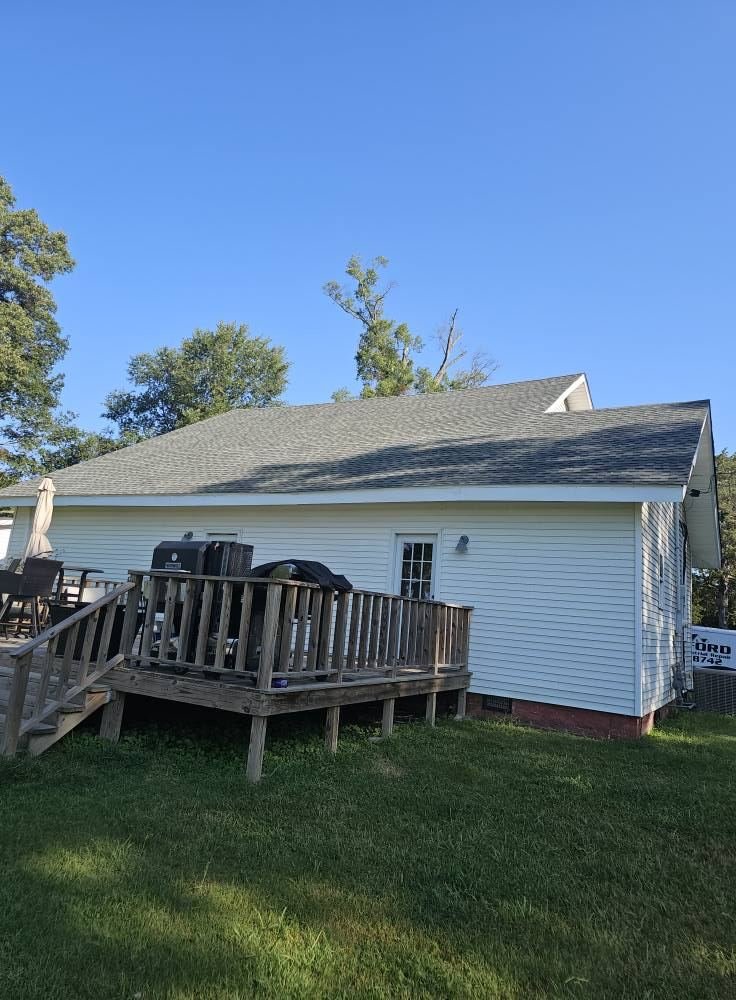
West Tennessee humidity sits above 70% for most of the summer. That’s ideal conditions for algae and moss growth on any roof slope that doesn’t get full sun, and Humboldt’s neighborhoods have plenty of mature trees creating that shade. Untreated algae looks like dark streaking at first but will eat through granules over time, accelerating shingle failure on roofs that would otherwise have years of service life left.
Agricultural exposure is the other Humboldt-specific factor. Properties on the outer edges of town — out toward the surrounding farmland — get dust accumulation that urban roofs don’t. Dust combined with moisture creates compounds that stick to shingles and accelerate wear. It also clogs gutters faster than leaves alone, which is why agricultural-area Humboldt properties often need more frequent gutter clearing than properties closer to the city center.
Both of these are exactly the kind of problem that maintenance addresses cheaply when caught early. Skipping maintenance lets these accumulate, and by the time they’re obvious, you’re in repair territory instead of maintenance territory.
The Humboldt-specific patterns matter for scheduling. Properties on the outer edges of town with agricultural exposure benefit from a third visit each year — usually after summer storm season — because dust and debris accumulate faster there than on properties closer to the city center. Older homes near downtown have flashing details that have been through decades of West Tennessee weather and need closer attention than newer construction. We adjust the schedule to what your property actually needs rather than applying the same routine everywhere.