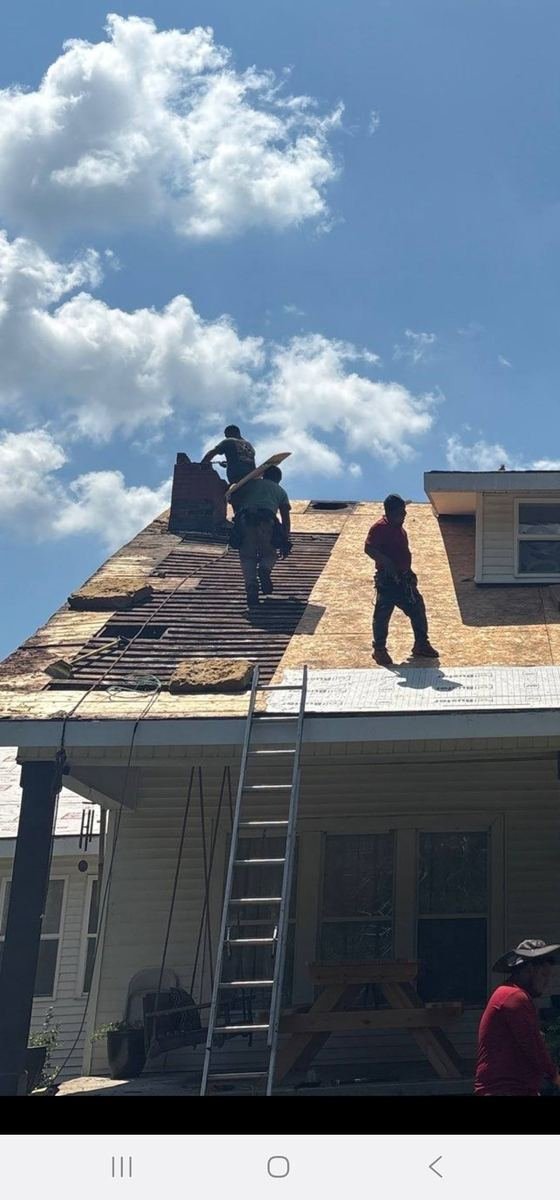
Our Emergency Process
How We Respond to Milan Calls
Phone triage first. When you call, we ask a few specific questions: Is water actively coming in? Is there visible structural damage? Has the weather system passed or is it still moving through? Those answers determine how fast we move and what equipment we bring.
Tarping done correctly. Emergency tarping isn’t throwing a tarp over a hole. It needs to be secured so it holds through the next wind event, sized to cover the full exposed area including spots that aren’t obviously damaged, and positioned to direct water away from already-saturated areas.
Damage documentation. Photos of every affected area before any temporary work, photos of the temporary protection in place, and a written assessment of the full scope. That package is what your insurance adjuster needs to process the claim without delays.
Plain conversation about what’s next. Before we leave, we explain how long the temporary protection should hold, what permanent repairs will involve, and what timeline makes sense for scheduling them.