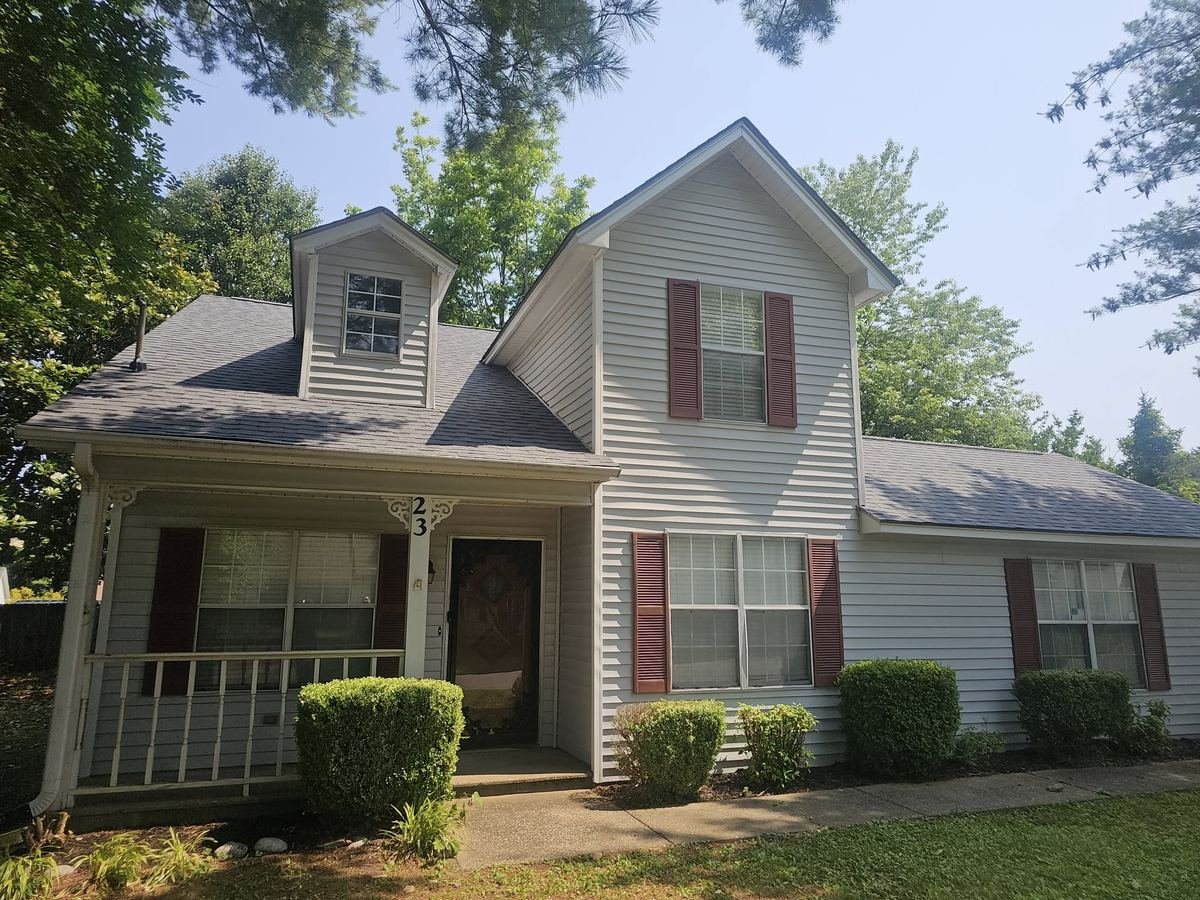
Spring storm season in West Tennessee runs April through June, and that’s when the bulk of our Humboldt emergency volume happens. Tornadic and straight-line wind events are the most damaging — they lift entire sections of roof, expose decking, and create the kind of damage that requires immediate response before the next rain band finishes the job. Hail comes with these systems too, and even when shingles look intact afterward, the impact damage can compromise seal strips in ways that surface as leaks weeks later.
Summer thunderstorms from June through August produce a different pattern. Less structural damage, more localized hail and wind events that hit individual properties hard while leaving neighbors untouched. The compressed time between storm development and impact during summer afternoons means homeowners often have minutes of warning, not hours.
Winter ice and freeze-thaw events are less frequent but cause specific damage on older Humboldt homes. Ice loading on aging structural systems can produce sudden failures, and freeze-thaw cycles work loose flashing seals that have been holding for decades.
The recurring lesson from Gibson County emergency calls: speed matters less than thoroughness. A tarp installed in the wrong direction or with the wrong attachment becomes a problem in the next wind event. A damage assessment that misses a secondary impact area becomes an insurance claim dispute. We move fast when speed matters, but never at the cost of doing the work right the first time.