
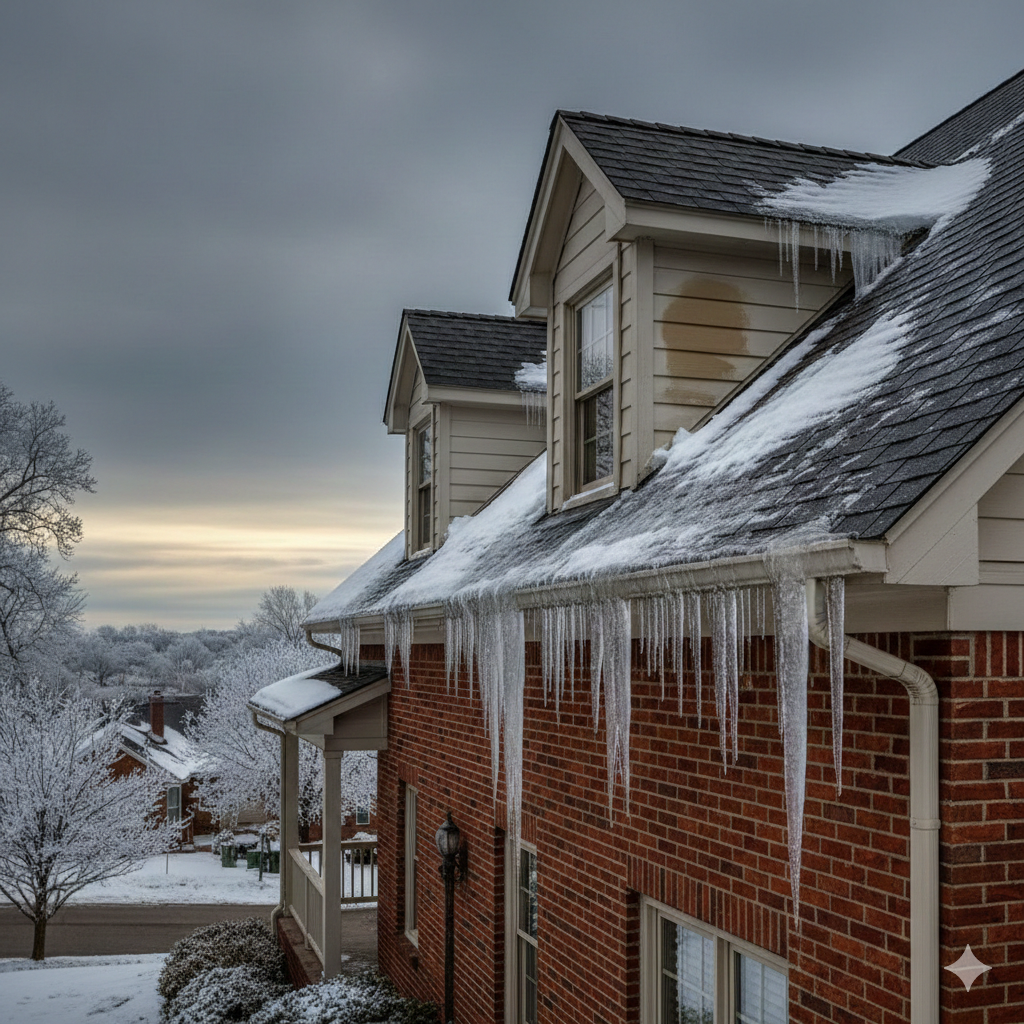
Living in West Tennessee, we’re used to humidity and heat, but the recent wave of freezing rain and snow has introduced a different kind of threat to our neighborhoods. From Jackson and Medina to Milan and Humboldt, homeowners are waking up to massive icicles and heavy snow accumulation.
While a snow-covered roof looks like a postcard, it can quickly turn into a structural nightmare. At Crawford Residential, we believe the best way to protect your home is to understand exactly how the freeze-thaw cycle affects your roof.
What is an Ice Dam? (The Silent Roof Killer)
An ice dam is a ridge of ice that forms at the edge of a roof and prevents melting snow (water) from draining off the roof. The water that backs up behind the dam can leak into a home and cause damage to walls, ceilings, insulation, and other areas.
This happens because of a temperature imbalance. Heat escaping from your living space warms the upper part of the roof, melting the snow. As that water flows down to the cold eaves (the overhang), it refreezes into a thick block of ice. Because asphalt shingles are designed to shed water moving downward, they are powerless against standing water that “wick” upward under the shingle.
If you suspect this is happening to you, it is critical to schedule a professional roof inspection before the next warm-up causes that trapped water to flood your interior.
5 Warning Signs of Ice Damage on Tennessee Homes
You don’t always need to climb a ladder to know your roof is in trouble. Keep an eye out for these red flags:
1. Massive, Heavy Icicles
While a few small icicles are normal, “curtains” of ice hanging from your gutters are a primary sign of an ice dam. This indicates that your gutters are frozen solid and water has nowhere else to go.
2. Gutters Bowing or Pulling Away
Ice is incredibly heavy (about 57 pounds per cubic foot). If your gutters weren’t perfectly cleaned before the storm, that trapped ice can weigh hundreds of pounds, causing the metal to warp or pull away from the wood fascia. This often requires specialized residential roof repair to fix the underlying structural damage.
3. Interior Ceiling Stains or Peeling Paint
Check the corners of your rooms and the tops of your window frames. If you see yellow rings or damp spots, water has already breached your shingles and is sitting in your drywall.
4. Snow “Valleys” on Your Roof
If you see bare patches on your roof while the rest is covered in snow, you have “hot spots” caused by poor attic insulation. These hot spots are the #1 engine that drives ice dam formation.
5. Brittle or Cracked Shingles
The extreme cold makes shingles brittle. If heavy ice slides off your roof, it can take the protective granules—or the entire shingle—with it. If your roof is older, this stress can be the “final straw” that makes a full roof replacement a more cost-effective option than constant patching.
The Insurance Question: Is Ice Damage Covered?
Many homeowners in the Jackson area ask us if their insurance will pay for these repairs. Generally, most standard Tennessee homeowners policies do cover “Weight of Ice and Snow.”
However, insurance companies often look for signs of “preventable neglect.” If your gutters were clogged with leaves before the ice hit, they might argue the damage was your fault. This is why we recommend having a contractor present during the inspection. We can help you document the “date of loss” and ensure your emergency roofing needs are communicated clearly to your adjuster.
Immediate “Do’s and Don’ts”
When the ice starts melting, your first instinct might be to take matters into your own hands. Stop.
- DON’T climb on a frozen roof. Shingles are slicker than they look, and the cold makes them fragile. Stepping on a frozen shingle can crack the matting instantly.
- DON’T use a hammer or ice pick. You will almost certainly punch a hole through your roof deck or destroy your gutters.
- DO check your attic. If you see frost on the underside of your roof boards, you have a ventilation problem that will lead to rot.
- DO clear your downspouts. If the bottom of your downspout is buried in a snowbank, the melting water above has nowhere to go.
Long-Term Solutions: How to Winter-Proof Your Home
The recent storm was a wake-up call. To ensure your home is ready for the next freeze, consider these three professional upgrades:
- Ice and Water Shield: During a residential roofing project, we install a special waterproof membrane along the eaves. This “self-heals” around nails, so even if water backs up under the shingles, it cannot reach your wood deck.
- Increased Attic Ventilation: Proper airflow keeps your roof deck at a uniform temperature, preventing the “hot spots” that melt snow prematurely.
- Gutter Maintenance: Ensuring your gutters are clear of debris is the simplest way to prevent ice from “bottlenecking” at your roofline.
Why Choose Crawford for Post-Storm Recovery?
We aren’t “storm chasers” from out of state. We are your neighbors. We understand the specific building codes and weather patterns of West Tennessee. Whether you need a quick leak patch or a comprehensive inspection to satisfy your insurance company, we are here to help.
Don’t wait for the next thaw to find a leak. Contact us today for a free, no-obligation inspection of your roof’s health.